
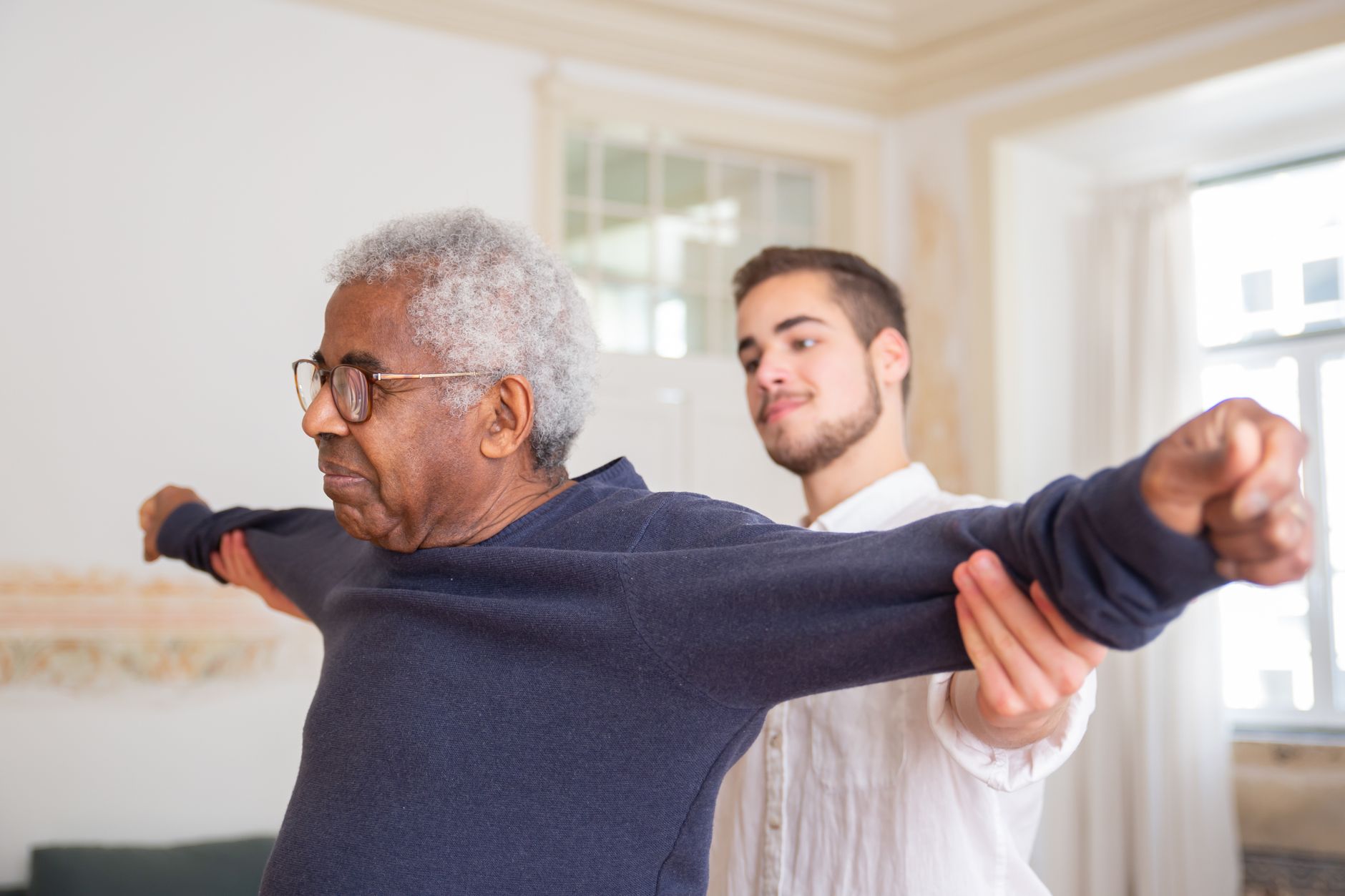
Activities for Seniors in Assisted Living: Building Strength and Balance
Right away, sir.
As someone who's spent decades pushing my body to its limits in Masters swimming, I've learned that balance is just as important as strength when it comes to staying independent and healthy as we age. Imagine walking down your hallway, stepping onto a patch of uneven rug or outdoor grass, and feeling entirely steady on your feet. That kind of confidence doesn't come from sitting on the sidelines or waiting for someone to hand you a walker. It comes from playful movement and daily engagement with the world around you. The playground doesn't care how old you are, and neither does your nervous system.
When people think about senior living communities like the Village at Duxbury or similar retirement villages, they often picture sedentary bingo nights or polite walks down carpeted hallways. But staying active requires more than just racking up step counts on a flat sidewalk. According to research from the National Institute on Aging and the American Geriatrics Society, targeted balance exercises can reduce the risk of falls by up to 50% in older adults. Furthermore, functional balance training improves overall mobility and keeps our neurological connections sharp. We aren't just protecting our joints; we're challenging both sides of your brain — every single day.
Why Balance Training Beats Bending Over Backward
Too many well-meaning fitness programs hand seniors a pair of light dumbbells and tell them to sit in a chair. Sitting is fine for resting, but it doesn't teach your brain how to recover when you trip over a crack in the pavement. Real life happens when we are standing, reaching, shifting our weight, and navigating variable terrain.
When you incorporate dynamic balance work into your routine—whether you are in an independent home or participating in community fitness classes—you activate the vestibular system, your eyes, and your proprioceptors all at once. It is a full-body dialogue between your brain and your feet. I get younger every year, and a huge part of that vitality comes from refusing to let my balance rust out from under me.
Stephen's two video programs — $12.99 for both
Active Play + 5-in-1 Training, one-time price, 30-day money-back guarantee.
Get the Complete Bundle →Functional Balance Exercises for Daily Living
You do not need an elaborate clinical laboratory to build better stability. You just need a bit of curiosity and a willingness to play.
1. **The Single-Leg Stance with a Twist:** Stand near a sturdy kitchen counter or the back of a couch for safety. Lift one foot just an inch off the floor. While balancing on that single leg, turn your head slowly from side to side, or toss a small soft object from hand to hand. This challenges your brain to maintain stability even when your visual field and center of gravity are shifting.
2. **Heel-to-Toe Walking on an Imaginary Tightrope:** Forget the standard treadmill stride. Line your heels up directly in front of your toes as if you are walking a tightrope across a stream. Take ten slow steps forward, focusing on looking straight ahead rather than down at your feet.
3. **Navigating Natural Surfaces:** Step outside onto grass, gravel, or a gentle slope. Our feet are packed with sensory receptors designed to read the ground beneath us. Pacing across flat linoleum every day puts those sensors to sleep. Wake them up with varied textures outdoors.
Bringing Playful Movement Into Senior Living Communities
If you or an aging parent live in a retirement village or assisted living center, you have likely seen the standard activity calendar: stretching, chair yoga, and leisurely walking clubs. Those are wonderful baseline offerings, but they rarely scratch the itch for genuine, playful exploration.
Many progressive community centers and gyms now offer specialized balance training programs, but you can also supplement them on your own time. Group activities like music concerts, communal gardening, or collaborative game nights build fantastic social bonds, but physical agility requires personal practice. You have to put skin in the game.
Look for ways to inject variety into your day. Stand up from your armchair without using your hands. Practice weight shifts while brushing your teeth. Turn ordinary household navigation into an interactive playground.
Never Leave the Playground
Age is just a number, but stiffness is a choice. You don't have to accept a shrinking world where every step outside feels like a high-stakes gamble. By introducing simple, playful balance challenges into your daily routine, you can reclaim your stability and protect your independence for decades to come.
If you are ready to take your practice further and want guided visual demonstrations of these techniques, check out our comprehensive $12.99 video bundle at neverleavetheplayground.com/videos.
Challenge both sides of your brain — every single day. Just keep moving, and never leave the playground.
Watch Stephen in Action
See these exercises demonstrated in Stephen's video program — playful movements anyone can do, at any age.
Browse the Video Collection →Stephen Jepson is 85 — and still teaching the world to move
His video program walks you through the exact playful exercises in this article — balance, coordination, and brain challenges you can do at home, at any age. Gentle, fun, and proven.
Stay on the Playground
Get Stephen's tips on movement, brain health, and longevity — free.
Stephen's two video programs — $12.99 for both
Active Play + 5-in-1 Training, one-time price, 30-day money-back guarantee.
Get the Complete Bundle →