
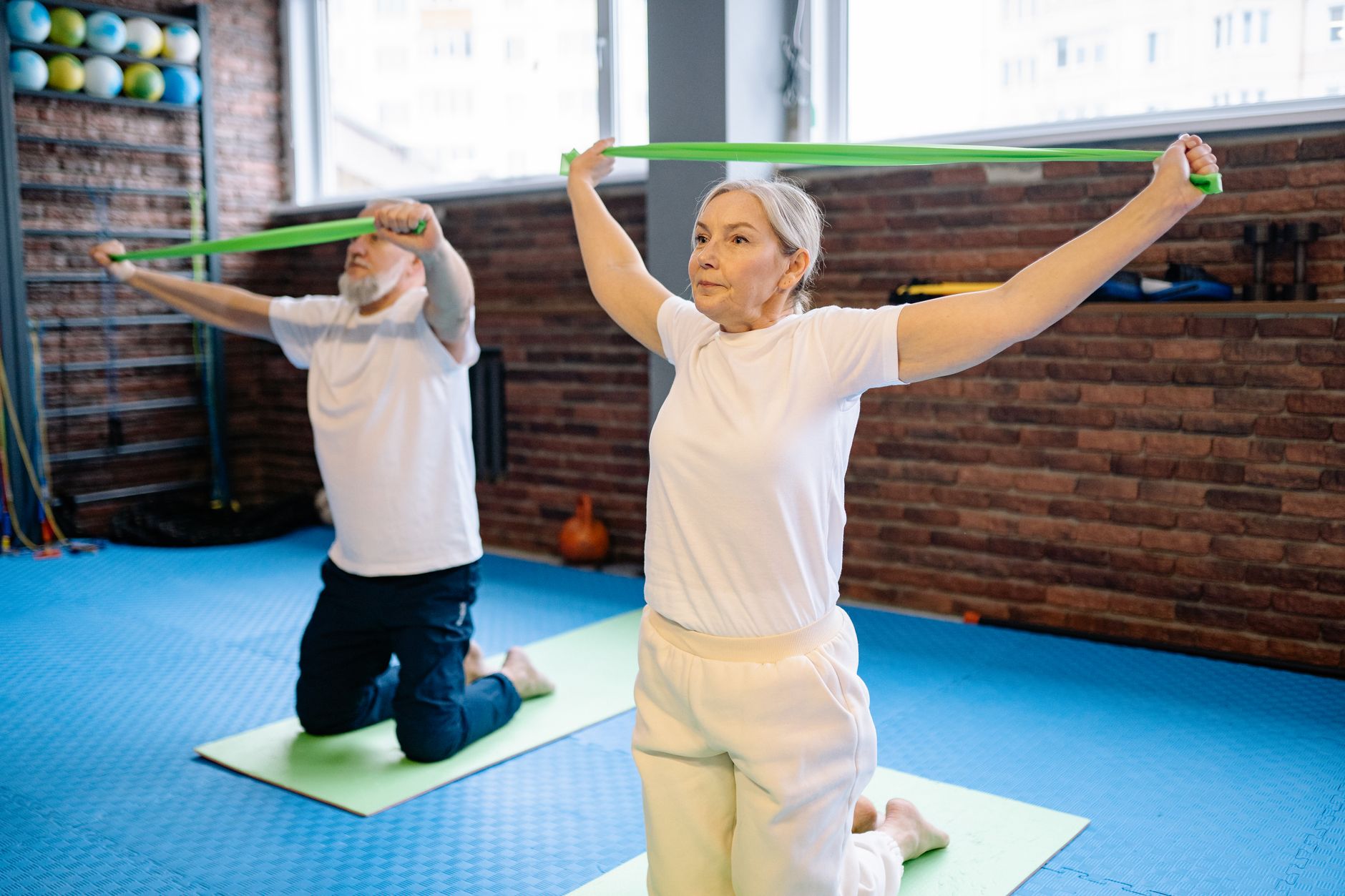
Boost Balance Training for Seniors with Playful Exercise
You don't have to be a spring chicken to bounce on a trampoline or swing from the rafters – every senior deserves to experience the thrill of play-based exercise, regardless of age or mobility. It's time to redefine what it means to be "old" and prove that with the right mindset and activities, you can stay young at heart and agile in body. I'm living proof: at 85, I'm still bouncing on the trampoline, and I get younger every year – you can too.
My Story: Finding Balance on the Playground
I still remember the day I decided to take my balance training to the next level. I was at the local playground, watching kids swing and play, when I noticed the balance beam. I thought to myself, "Why not? I'm a potter, a movement educator, and a former professor – I can definitely handle a balance beam." So, I hopped on and started walking. It wasn't easy, but with each step, I felt my balance improving, my core engaging, and my confidence soaring. The kids around me were cheering me on, and I felt like a kid again. That's when it hit me: the playground doesn't care how old you are. It's a place where everyone can come to play, learn, and grow.
As I continued to explore the playground, I realized that balance training wasn't just about standing on one foot or walking on a beam. It was about challenging both sides of my brain – every single day. I started incorporating balance exercises into my daily routine, and soon I noticed significant improvements in my overall health and well-being. My balance was better, my strength was increasing, and my mind was sharper. I was having fun, and that's what mattered most.
The Science Behind Balance Training
Research has shown that balance training is essential for older adults, particularly those at risk of falls. According to recent studies, exercises that focus on balance, coordination, and functional movements can significantly reduce the risk of falls and related injuries. The science is clear: balance training works, and it's never too late to start. In fact, the National Institutes of Health (NIH) recommends that older adults engage in balance training at least three times a week for a minimum of 45 minutes to see significant improvements.
But what exactly is balance training, and how can you incorporate it into your daily routine? Balance training involves exercises that challenge your balance, coordination, and overall physical fitness. It can include activities like standing on one foot, walking on a balance beam, or even simple exercises like standing with your feet together and holding steady for 10 seconds. The key is to start slow, be consistent, and gradually increase the difficulty level as you progress.
Practical Steps: Taking Balance Training to the Next Level
So, what can you do today to start incorporating more balance training into your routine? Here are a few ideas to get you started:
1. **Find a playground near you**: Yes, you read that right – a playground! It's a great place to start your balance training journey. Look for a playground with a balance beam, bars, or other equipment that can challenge your balance and coordination.
2. **Start with simple exercises**: Begin with simple balance exercises like standing on one foot, walking on a flat surface, or standing with your feet together. Hold onto a chair or wall for support if needed, and gradually increase the difficulty level as you progress.
3. **Incorporate play-based activities**: Don't be afraid to get creative and have fun with your balance training. Try bouncing on a trampoline, swinging from the rafters, or even playing games that challenge your balance and coordination.
4. **Challenge both sides of your brain**: Remember, balance training is not just about physical exercise – it's also about challenging your brain. Try incorporating activities that engage your cognitive abilities, such as puzzles, brain teasers, or even learning a new skill.
Closing Inspiration: Never Leave the Playground
As I always say, "Never leave the playground." It's a mindset, a way of life that keeps you young, active, and engaged. By incorporating balance training into your daily routine, you'll not only improve your physical health but also challenge your brain and keep your mind sharp. So, don't be afraid to take the first step – or should I say, the first bounce – towards a healthier, happier you. Just keep moving, and remember, the playground doesn't care how old you are. Visit neverleavetheplayground.com to learn more about play-based exercise and balance training, and join our community of like-minded individuals who are committed to staying young at heart and agile in body. I get younger every year, and you can too – so come and play with us!
Watch Stephen in Action
See these exercises demonstrated in Stephen's video program — playful movements anyone can do, at any age.
Browse the Video Collection →Stephen Jepson is 85 — and still teaching the world to move
His video program walks you through the exact playful exercises in this article — balance, coordination, and brain challenges you can do at home, at any age. Gentle, fun, and proven.
Stay on the Playground
Get Stephen's tips on movement, brain health, and longevity — free.