
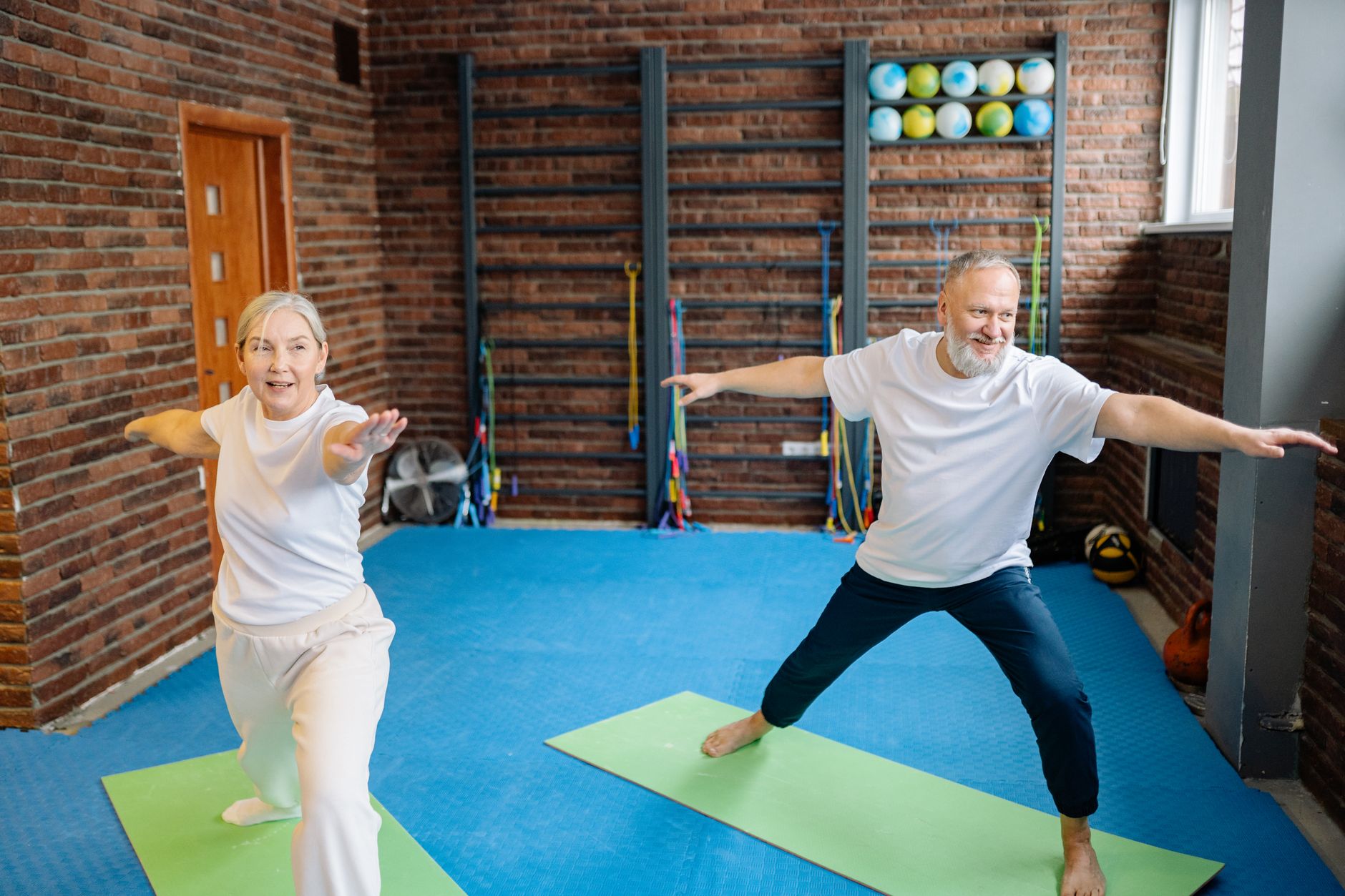
Total Hip Replacement Exercise Guide
As someone who's spent decades pushing my body to its limits in Masters swimming, I've learned that balance is just as important as strength when it comes to staying independent and healthy as we age. Imagine being able to walk into your home without worrying about falling, or being able to enjoy your favorite activities without fear of losing your balance.
Why Balance Matters More Than You Think
We talk endlessly about lifting heavy things and running marathons, but the real secret to graceful, long-lasting movement is hiding in plain sight: balance. According to extensive research from organizations like the National Institute on Aging and the American Geriatrics Society, targeted balance exercises can reduce the risk of falls by up to 50% in seniors. Furthermore, functional balance exercises can improve overall mobility and reduce the risk of chronic conditions by keeping your neuromuscular system sharp and responsive.
The playground doesn't care how old you are. When we look at traditional rehabilitation guidelines—such as the recovery protocols following a total hip replacement—we see a heavy emphasis on gentle, controlled movements like sliding your foot toward your buttocks while lying down or rebuilding stability from the ground up. But why wait for an injury to start practicing? Regular movement is essential for maintaining joint health, and the mechanics of rebuilding stability apply whether you are recovering from surgery or simply refusing to slow down.
Stephen's two video programs — $12.99 for both
Active Play + 5-in-1 Training, one-time price, 30-day money-back guarantee.
Get the Complete Bundle →Challenge Both Sides of Your Brain
To build bulletproof stability, you have to challenge both sides of your brain—every single day. Many community centers and gyms now offer balance training programs specifically designed for seniors, recognizing that agility is a skill we must practice rather than a trait we simply lose to time. But you don't need a sterile gym to get to work. You need a mindset of curiosity and playful exploration.
Think about how children move. They don't do structured sets of boring calisthenics; they climb, balance on curbs, and test their limits with joyful abandon. We can incorporate these exact principles into our daily routines using simple tools like balance boards for seniors or exploring adult playground equipment during your morning walk.
Practical Steps for Everyday Movement
Here is how you can weave playful movement into your day without turning it into a chore:
1. **The Single-Leg Stand:** While brushing your teeth or waiting for the kettle to boil, lift one foot off the floor. Focus your gaze on a stationary point across the room. Switch sides after thirty seconds. This simple act fires up the proprioceptors in your ankles and hips.
2. **Heel-to-Toe Walking:** Imagine walking a tightrope down your hallway. Place the heel of one foot directly in front of the toe of the other. It sounds elementary, but it forces your vestibular system to recalibrate instantly.
3. **Incorporate Playful Coordination:** Toss a small rubber ball from hand to hand while shifting your weight gently from side to side. When you combine cognitive tasks with physical balancing, your brain builds entirely new neural pathways.
As I always say, I get younger every year—and you can too. Aging is inevitable, but how we inhabit our bodies along the way is entirely up to us. Step outside, find a safe curb or a patch of grass, and remember to never leave the playground.
Ready to dive deeper into playful coordination and movement longevity? Grab our complete video collection today at neverleavetheplayground.com/videos for just $12.99 and start transforming your daily mobility right now.
Watch Stephen in Action
See these exercises demonstrated in Stephen's video program — playful movements anyone can do, at any age.
Browse the Video Collection →Movement as medicine — gentle videos from Stephen Jepson
Playful, low-impact exercises used by therapists and people managing chronic conditions — rebuild balance, mobility, and confidence at your own pace, right from home.
Stay on the Playground
Get Stephen's tips on movement, brain health, and longevity — free.
Stephen's two video programs — $12.99 for both
Active Play + 5-in-1 Training, one-time price, 30-day money-back guarantee.
Get the Complete Bundle →